lunes, 22 de octubre de 2018

PURE SUBSTANCES AND MIXTURES - TEMPERATURE

Hi Students:

This week we will work on Pure substances and Mixtures and we will observe some reactions and the relationship between temperature and reaction, and the influence of temperature in this chemical phenomena.

In you have Lego blocks from differents colors at home bring them to class, please.

Resultado de imagen para legos
We will work in the classroom with the following worksheet.

WORKSHEET ON PURE SUBSTANCES AND

And in the lab with the next one

LAB WORKSHEET ON CHANGES IN TEMPERATURE

So please, print  and bring them to class!!!

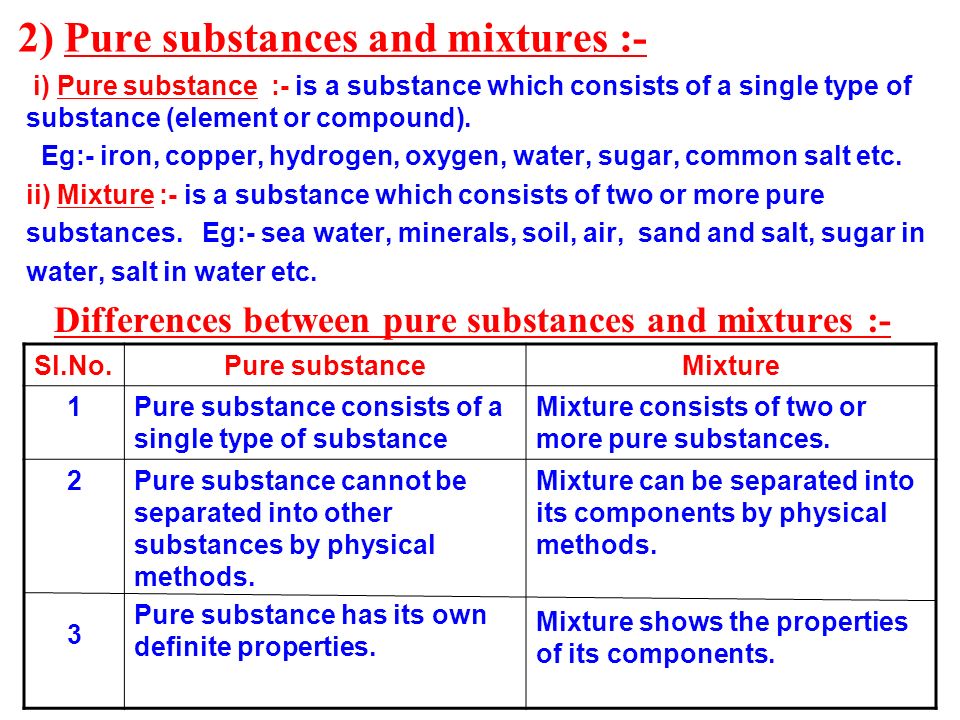
Watch this videos, and read the information  to understand basic concepts.


File#69744450003: concept map classification of matter Path Decorations Pictures. Classifying Matter Flow Chart Answers


Resultado de imagen para pure substances and mixtures


See you at class!!!

jueves, 4 de octubre de 2018

VOLUME, LENGHT AND AREA

Hi Students:

This week we will

Use the following link to find information about density,

https://www.thoughtco.com/what-is-density-definition-and-calculation-2698950

Here´s the link for the Lab worksheet.

Worksheet for Lab on lenght, area and volume

Watch this video to understand how to do the Lab measurements.


This is the rubric we will use to score the Lab exercises


LAB REPORT RUBRIC
Group names ____________________________________________________________________________________________________________________
________________________________________________________________________   6 ° __________                Date: ________________________________
ELEMENTS
GOALS
PUNCTUATION (0-10)
1. Theoretical Framework
The concepts are explained, giving descriptions, examples and all the necessary information to design the laboratory

2. Question and Purpose
The purpose of the lab or the question to be answered during the lab is clearly identified and stated.

3. Experimental Hypothesis
Hypothesized relationship between the variables and the predicted results is clear and reasonable based on what has been studied.

4. Materials
All materials are drawn an labeled

5. Experiment (Procedure Steps)
Procedures are listed in clear steps, using a flow chart. Each step is numbered and is a complete sentence, or a drawing.

6. Observations and Data Collection
Professional looking and accurate representation of the data in paragraph, tables and/or graphs. Graphs and tables are labeled and titled.

7. Conclusion
Conclusion includes whether the findings supported the hypothesis, possible sources of error, and what was learned from the experiment. At least 6 sentences are written.

8. Appearance and Organization
Lab report is neatly handwritten and uses headings and subheadings to visually organize the material.

9. Participation
Lab coat is used in the lab. Used time well in lab and focused attention on the experiment.

10. Spelling, Punctuation and Grammar
One or fewer errors in spelling, punctuation and grammar in the report.


TOTAL


See you at class!!!

viernes, 21 de septiembre de 2018

SCIENTIFIC METHOD

Hi guys:

This week we will work in the scientific method steps and uses.

Print this worksheet and bring it to the next class!!!!

SCIENTIFIC METHOD WORKSHEET

Watch this video at home.


6A 6B 6C TOPICS and materials given by teacher Materials students must bring
ARISTIZABAL DIAZ HERNAN, GARCIA VASQUEZ MELISSA ALEXANDRA, RUEDA AGUILERA MIGUEL ANGEL AVELLANEDA BEJARANO NICOLAS LEONARDO, SARMIENTO MARTINEZ DIEGO, ALDANA RUEDA JUANA VALENTINA BARO PEREZ DIEGO ALEJANDRO, ROSERO DELGADO TOMAS SANTIAGO, CASTAÑEDA ALVAREZ MARIANA 1. Oreo Cookie Challenge
Do Double-Stuff Oreos actually have double the stuffing or regular oreos?
Equipment: Scale, Beaker,
*you may need to set some guidelines about eating the experiment items

 Rulers, ( Crackers) Oreos and Double Stuff Oreos
BAEZ CHAPARRO SAMUEL, GOMEZ QUINTERO LUCIANA CORRALES CORTES MIGUEL ANGEL,ARISTIZABAL SUAREZ LAURA, TRUJILLO MONTEALEGRE MARIA CAMILA CARRASCO MOSQUERA JUAN IGNACIO, SERRANO HORTUA JOSE FARITH, CUERVO MANRIQUE ANA SOFIA 2. Are Bounty paper towels more absorbant than generic paper towels?
Equipment: Beaker, Graduated Cylinder, Scale, Rulers, Water, Two types of towels
Dissecting trays or pans might help for catching water.
 Rulers, Two types of kitchen towels
BELTRAN PARIS JUAN DIEGO, BOHORQUEZ CHACON DANNA SOFIA, CASTRO CIENDUA SARA JULIANA ESPINOSA RAMIREZ JUAN ESTEBAN, CHOACHI CELIS NICOLLE SOFIA, SCARPETTA DUARTE CAMILA CARREÑO PASTRANA ANDRES FELIPE, VERGEL CHAPARRO DANIEL SANTIAGO, GARCIA JIMENEZ MANUELA 3. How does surface area of a candy affect how quickly it dissolves in water?
Equipment: smarties or sweet tarts (or any sugary dissolvable candy that can be cut into smaller portions), water, ruler, scale, *scalpel or blade, timer
smarties or sweet tarts (or any sugary dissolvable candy that can be cut into smaller portions), ruler,*scalpel or cutter
CUBILLOS GOMEZ NICOLAS, MONCADA ROSAS ISABELLA FLOREZ BUITRAGO JUAN SEBASTIAN, IBAÑEZ VILLADA SOFIA, MANOSALVA TORRES VALERIE ALEXANDRA CUBIDES ACOSTA MARTIN ANDRES, RICCI CASTILLO MATIAS, 4. Many gum brands claim that they have the longest lasting flavor. Design and conduct an experiment to determine what type of gum has the longest lasting flavor.
clock,
 a variety of different types of gum
GARZON BAYONA JUAN SEBASTIAN, ROJAS ACERO VALENTINA FORD SALAZAR MATTHEW JAY, MARTINEZ SANCHEZ VALERIA SOFIA GAITAN NAVEROS SAMUEL, LAZARO LAZARO KATHERINE VANESSA 5. Which type of polish remover works best, acetone or acetone free?
fingernail polish, polish remover (2 types), dishes, lids, or other surfaces to paint on, variety is good so that students must consider the surface when conducting the experiment.
HERRERA ULLOA SIMON, RIOS PINZON MARÍA JOSÉ, VARGAS VILLAREAL THOMAS HINCAPIE CASTRO JUAN DIEGO, NARANJO ERAZO LUISA MARIA, RODRIGUEZ AVILA LAURA SOFIA GÓMEZ PEDRAZA JERÓNIMO, YEPES RODRIGUEZ CAMILO ANDRES, MAHECHA GUIO PAULA ALEJANDRA, ORTIZ CABALLERO SHARON NICOL 1. Oreo Cookie Challenge
Do Double-Stuff Oreos actually have double the stuffing or regular oreos?
Equipment: Scale, Beaker, Rulers, *Oreos and Double Stuff Oreos
*you may need to set some guidelines about eating the experiment items
Equipment: Scale, Beaker, Rulers, *Oreos and Double Stuff Oreos
 Rulers, *Oreos and Double Stuff Oreos
LEGUIZAMON LOPEZ LEANDRO, CRESPO PACHON SOREL PARRA CORTES JUAN ANDRES, ROJAS BOTERO ANA MARÍA, TENJICA CHAPARRO GABRIELA ALEXANDRA MEDINA MEDINA NICOLAS, PALACIOS VILLAMARIN ANA SOFIA, ARATE LOSADA ISABELLA 2. Are Bounty paper towels more absorbant than generic paper towels?
Equipment: Beaker, Graduated Cylinder, Scale, Rules, Water, Two types of towels
Dissecting trays or pans might help for catching water.
 Rulers, Two types of kitchen towels
MEJIA PANESSO DIEGO ALEJANDRO, HERNÁNDEZ SÁNCHEZ PAULA VALENTINA PIZARRO AMAYA MANUEL, SANCHEZ RODRIGUEZ ANA SOFIA, SILVA GUTIERREZ RAFAEL MENDOZA REY SANTIAGO, QUIMBAYO TORRES EMHILY STEPHANIA 3. How does surface area of a candy affect how quickly it dissolves in water?
Equipment: smarties or sweet tarts (or any sugary dissolvable candy that can be cut into smaller portions), water, ruler, scale, *scalpel or blade, timer
smarties or sweet tarts (or any sugary dissolvable candy that can be cut into smaller portions), ruler,*scalpel or cutter
PARRA JIMENEZ DAVID ALEJANDRO, PIÑEROS LEON DANIELA, VARGAS MORENO JUAN SEBASTIAN ROBLES MORENO JUAN SEBASTIAN, SUAREZ RUIZ GABRIEL JOSE   4. Many gum brands claim that they have the longest lasting flavor. Design and conduct an experiment to determine what type of gum has the longest lasting flavor.
clock, a variety of different types of gum
 a variety of different types of gum


Steps of the Scientific Method

What is the Scientific Method?

The scientific method is a process for experimentation that is used to explore observations and answer questions. Does this mean all scientists follow exactly this process? No. Some areas of science can be more easily tested than others. For example, scientists studying how stars change as they age or how dinosaurs digested their food cannot fast-forward a star's life by a million years or run medical exams on feeding dinosaurs to test their hypotheses. When direct experimentation is not possible, scientists modify the scientific method. In fact, there are probably as many versions of the scientific method as there are scientists! But even when modified, the goal remains the same: to discover cause and effect relationships by asking questions, carefully gathering and examining the evidence, and seeing if all the available information can be combined in to a logical answer.
Even though we show the scientific method as a series of steps, keep in mind that new information or thinking might cause a scientist to back up and repeat steps at any point during the process. A process like the scientific method that involves such backing up and repeating is called an iterative process.
Whether you are doing a science fair project, a classroom science activity, independent research, or any other hands-on science inquiry understanding the steps of the scientific method will help you focus your scientific question and work through your observations and data to answer the question as well as possible.
Steps of the Scientific Method
Steps of the Scientific MethodDetailed Help for Each Step
Ask a Question: The scientific method starts when you ask a question about something that you observe: How, What, When, Who, Which, Why, or Where?For a science fair project some teachers require that the question be something you can measure, preferably with a number.Your Question
Do Background Research: Rather than starting from scratch in putting together a plan for answering your question, you want to be a savvy scientist using library and Internet research to help you find the best way to do things and insure that you don't repeat mistakes from the past.Background Research Plan
Finding Information
Bibliography
Research Paper
Construct a Hypothesis: A hypothesis is an educated guess about how things work. It is an attempt to answer your question with an explanation that can be tested. A good hypothesis allows you to then make a prediction:
"If _____[I do this] _____, then _____[this]_____ will happen."State both your hypothesis and the resulting prediction you will be testing. Predictions must be easy to measure.
Variables
Variables for Beginners
Hypothesis
Test Your Hypothesis by Doing an Experiment: Your experiment tests whether your prediction is accurate and thus your hypothesis is supported or not. It is important for your experiment to be a fair test. You conduct a fair test by making sure that you change only one factor at a time while keeping all other conditions the same.You should also repeat your experiments several times to make sure that the first results weren't just an accident.Experimental Procedure
Materials List
Conducting an Experiment
Analyze Your Data and Draw a Conclusion: Once your experiment is complete, you collect your measurements and analyze them to see if they support your hypothesis or not.Scientists often find that their predictions were not accurate and their hypothesis was not supported, and in such cases they will communicate the results of their experiment and then go back and construct a new hypothesis and prediction based on the information they learned during their experiment. This starts much of the process of the scientific method over again. Even if they find that their hypothesis was supported, they may want to test it again in a new way.Data Analysis & Graphs
Conclusions
Communicate Your Results: To complete your science fair project you will communicate your results to others in a final report and/or a display board. Professional scientists do almost exactly the same thing by publishing their final report in a scientific journal or by presenting their results on a poster or during a talk at a scientific meeting. In a science fair, judges are interested in your findings regardless of whether or not they support your original hypothesis.Final Report
Abstract
Display Board
Science Fair Judging
Taken from: 

https://www.sciencebuddies.org/science-fair-projects/science-fair/steps-of-the-scientific-method

Resultado de imagen para SCIENTIFIC METHOD VARIABLES

See you at class!!!


viernes, 7 de septiembre de 2018

WEATHER, CLIMATE AND BIOMES

Hi guys:

This week we will be working on the climate and weather implications in the living things that live in different Biomes.

Here you have the groups, and assigned Biomes, per class. Open the file, and check the information.

ORAL PRESENTATION ASSIGNMENT

And also you will prepare and oral presentation about Colombian Ecosystems, so we will prepare it, during the classes. 

If you have the Jet Album, Vive la Aventura Colombia, bring it to class. we will work using its information, and bring colors, makers and 1/8 of white card board.

You should bring information about the ecosystem you will describe

Watch this video and take notes in your notebook to get extra points.


Here you have a concept map with the components of the weather

Resultado de imagen para WEATHER CONCEPT MAP


Images of the types of clouds

Resultado de imagen para cumulus cirrus and stratus clouds


And finally some consequences of climate


Climate and Plant Growth

Plants are the major producers in terrestrial biomes. They have five basic needs: air, warmth, sunlight, water, and nutrients. How well these needs are met in a given location depends on the growing season and soil quality, both of which are determined mainly by climate.
  • The growing season is the period of time each year when it is warm and wet enough for plants to grow. The growing season may last all year in a hot, wet climate but just a few months in a cooler or drier climate.
  • Plants grow best in soil that contains plenty of nutrients and organic matter. Both are added to soil when plant litter and dead organisms decompose. Decomposition occurs too slowly in cold climates and too quickly in hot, wet climates for nutrients and organic matter to accumulate. Temperate climates usually have the best soil for plant growth.

Climate and Biodiversity

Because climate determines plant growth, it also influences the number and variety of other organisms in a terrestrial biomeBiodiversity generally increases from the poles to the equator. It is also usually greater in more humid climates. This is apparent from the desert and rainforest biomes pictured in Figure above.

Climate and Adaptations

Organisms evolve adaptations that help them survive in the climate of the biome where they live. For example, in biomes with arid climates, plants may have special tissues for storing water (see Figure below). The desert animals pictured in Figure below also have adaptations for a dry climate.
Aloe and cactus have special tissues for storing waters
The aloe plant on the left stores water in its large, hollow leaves. The cactus plant on the right stores water in its stout, barrel-shaped stems.[Figure4]
Gila monster and a kangaroo rat have adaptations to survive in the dry climate
The Gila monster’s fat tail is an adaptation to its dry climate. It serves as a storage depot for water. The kangaroo rat has very efficient kidneys. They produce concentrated urine, thus reducing the amount of water lost from the body.[Figure5]
In biomes with cold climates, plants may adapt by becoming dormant during the coldest part of the year. Dormancy is a state in which a plant slows down cellular activities and may shed its leaves. Animals also adapt to cold temperatures. One way is with insulation in the form of fur and fat. This is how the polar bears in Figure below stay warm.
Polar bears have insulation in the form of fur and fat in order to stay warm in their Arctic ecosystem
Thick fur and a layer of blubber keep polar bears warm in their Arctic ecosystem. Why do you think their fur is white? Why might it be an adaptation in an Arctic biome?

viernes, 31 de agosto de 2018

BIOMES AND WEATHER

Hi students:

During the third week we will work in the Field Diary.

So please, bring it, to the first class of the week, and also your text book, colors, scissors and glue.

Print this worksheet in any of the following links.

INTERACTIVE NOTEBOOK ON BIOMES AND WEATHER

INTERACTIVE NOTEBOOK ON BIOMES AND WEATHER

Finally watch this video, we will have a quiz about it, to  get extra points.


See you at class!!!

viernes, 24 de agosto de 2018

ECOSYSTEMS

Hi guys, welcome to the 3° Term..

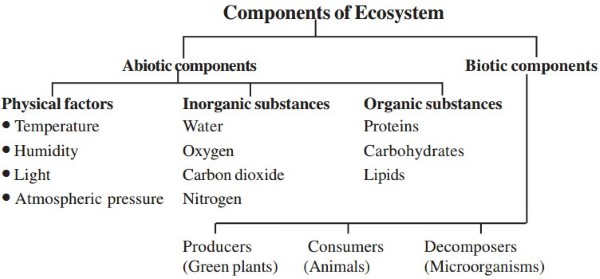
This week we will be working on the ecosystems components and levels of organization.

For the first class of the second week you must bring 1 cardboard (1 pliego), white color, text book, colors, scissors and markers.

Play the game in the link, to understand different concepts related to ecosystems components

http://pbskids.org/plumlanding/games/ecosystem/feed_the_dingo.html

Watch this video and take notes in your notebook to get extra points.


Resultado de imagen para ECOSYSTEMS COMPONENTS

See you at class!!!

martes, 31 de julio de 2018

HUMAN RESPIRATORY SYSTEM

Hi students:

This week we will work in a Lab exercise to observe some physiological characteristics of the Human respiratory system.

Print the worksheet in the following link and bring it to class!!

Worksheet on Human Respiratory System Lab

Watch this video to observe how your respiratory system work and take notes in your notebook to get extra points.


See you at class!!!